

InvoiceNow Singapore: Timeline, Requirements & What Businesses Should Do
Key Takeaways
- From 1 April 2026, newly GST-registered businesses applying for voluntary GST registration must be ready to use InvoiceNow to send invoice data to the Inland Revenue Authority of Singapore (IRAS).
- The initiative is part of Singapore’s digitalisation efforts led by IRAS and the Infocomm Media Development Authority (IMDA).
- The requirement will expand progressively from 2028 to 2031, eventually covering all GST-registered businesses in Singapore.
- Eligible SMEs can access free InvoiceNow-ready solutions until March 2031, helping businesses adopt e-invoicing with minimal cost.
- Early adoption helps businesses benefit from faster GST refund processing, reduced manual errors, and stronger compliance readiness.
Starting 1 April 2026, businesses applying for voluntary GST registration must be ready to transmit invoice data using InvoiceNow.
This initiative is led by the Inland Revenue Authority of Singapore (IRAS) in collaboration with the Infocomm Media Development Authority (IMDA), as part of Singapore’s broader effort to digitise business transactions and improve tax compliance.
For businesses considering voluntary GST registration, this means InvoiceNow readiness will soon become part of the process. Understanding the requirement now will help you avoid delays and ensure a smoother transition.
What Is InvoiceNow?
InvoiceNow is Singapore’s nationwide e-invoicing network that allows businesses to send and receive invoices directly between accounting systems.
Built on the global Peppol network, InvoiceNow eliminates manual processes such as sending invoices via email or manually entering invoice data into accounting systems.
Instead, invoice information is transmitted system-to-system securely in a structured digital format, making invoicing faster, more accurate, and easier to track.
Key Benefits of InvoiceNow:
- Faster Processing: Invoices are delivered instantly between business systems, reducing delays in processing and payments.
- Reduced Manual Errors: Structured invoice data eliminates mistakes caused by manual data entry.
- Better Compliance: Digital records improve transparency and make it easier to meet tax reporting requirements.
- Improved Cash Flow Visibility: Finance teams can track invoices more accurately when they flow directly into accounting systems.
New Requirement from 1 April 2026
From 1 April 2026, businesses applying for voluntary GST registration must:
- Be InvoiceNow-ready, and
- Be able to transmit invoice data to IRAS using InvoiceNow
This requirement applies specifically to businesses that choose to register for GST voluntarily, even if their taxable turnover has not reached the compulsory GST registration threshold.
The goal is to encourage early adoption of digital invoicing and structured tax reporting across Singapore’s business ecosystem.
The InvoiceNow Timeline
All GST-registered businesses in Singapore must adopt InvoiceNow. This phased approach allows businesses to gradually transition to digital invoicing while ensuring the ecosystem is ready.
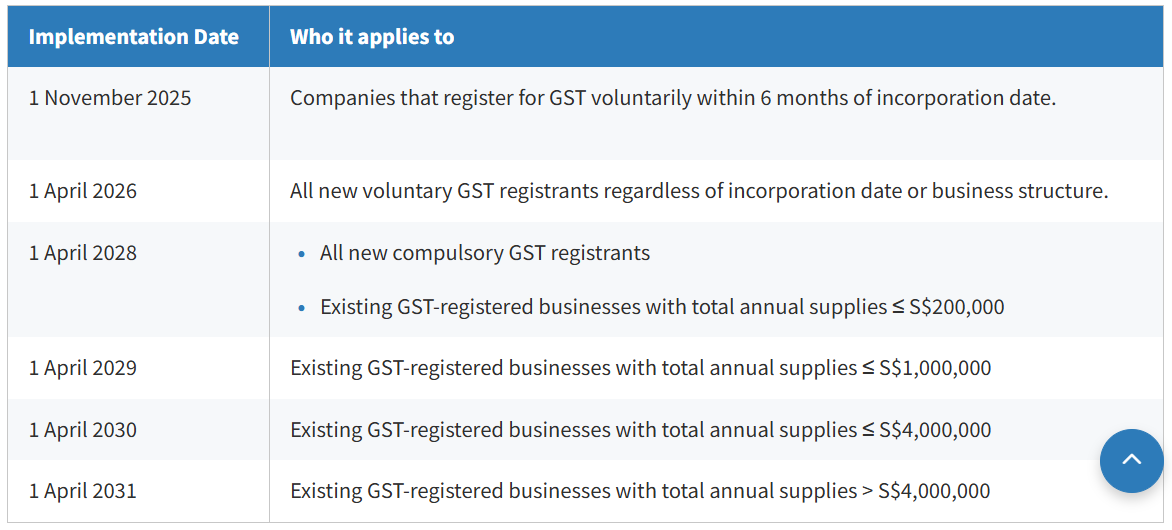
SOURCE: IRAS
Why Businesses Should Prepare Early
Although the first mandatory requirement only begins in April 2026 for voluntary registrants, preparing early provides several advantages.
Access Free InvoiceNow Solutions
Eligible SMEs can access free InvoiceNow-ready solutions until March 2031, helping businesses adopt digital invoicing without significant upfront costs.
Qualify for Digitalisation Support
Singapore’s digital transformation initiatives often include government grants and support schemes to help businesses upgrade their systems.
Faster GST Refund Processing
Structured invoice data allows IRAS to process GST filings more efficiently, which can help businesses receive GST refunds faster.
Reduce Compliance Risk
Manual invoicing processes can lead to:
- Data entry errors
- Missing records
- Duplicate invoices
InvoiceNow helps ensure consistent and accurate invoice data, reducing compliance issues.
How to Prepare for InvoiceNow
If your business is planning to register for GST voluntarily or expects to do so in the near future it’s important to start preparing now.
1. Check Whether Your Accounting Software Supports InvoiceNow
Not all accounting systems are InvoiceNow-enabled. Businesses should check the InvoiceNow Directory maintained by IMDA to find software solutions that support the network.
2. Review Your Invoicing Processes
Assess how your invoices are currently created, sent, and recorded. Businesses relying heavily on manual processes or spreadsheets may need to upgrade their workflows.
3. Ensure Your Finance Team Is Ready
Finance teams should familiarise themselves with:
- Digital invoice transmission
- Structured invoice formats
- System integration with accounting software
4. Consider Early Adoption
Adopting InvoiceNow early allows businesses to:
- Improve invoicing efficiency
- Reduce manual work
- Prepare well ahead of regulatory deadlines
Early adoption also means less pressure when compliance becomes mandatory.
The Future of GST Reporting in Singapore
For businesses considering voluntary GST registration, the message is clear: Preparing for InvoiceNow today will make compliance far easier tomorrow.
Get ahead of the upcoming InvoiceNow requirements today. Learn how you can stay compliant, reduce manual errors, and streamline your invoicing processes here.